 IDEAL VERSION
Why Is Social Media So Addictive? How Platforms Keep You Scrolling
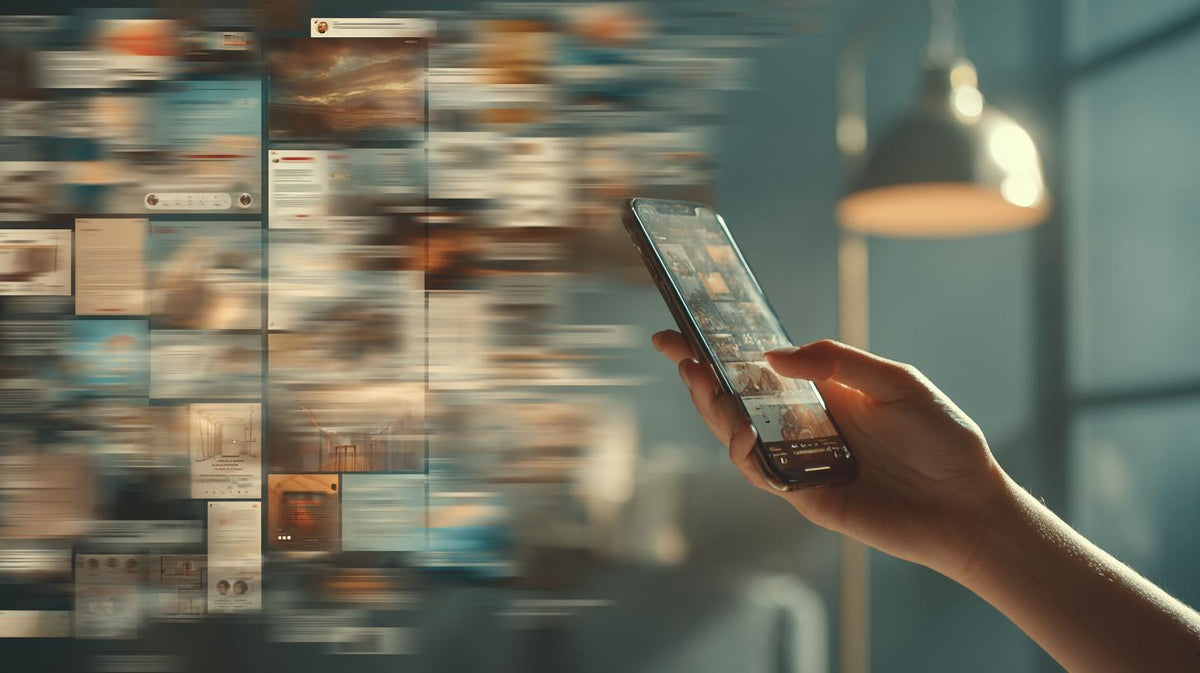
You open Instagram to check one notification.
A few minutes later, you're watching a Reel about productivity. Then a funny video. Then someone's vacation. Then another Reel you didn't even search for.
Suddenly, half an hour has disappeared.
You weren't planning to spend that much time online. You might not even remember most of what you watched.
So why was it so difficult to stop?
Here's something worth understanding: Social media isn't just a collection of content. It's an environment designed to encourage engagement.
From infinite scrolling to personalized recommendations, many platforms use features that make staying online remarkably convenient.
But is social media designed to be addictive?
Let's explore the psychology behind these features, what scientific research actually says, and how you can take back control of your attention.
Is Social Media Designed to Be Addictive?
Social media companies generally want people to return to their platforms and spend time engaging with content.
User engagement can support advertising revenue, audience growth, and other business objectives.
To encourage engagement, platforms often use personalized recommendations, autoplay, social feedback, and endless feeds.
A 2023 academic review published in Current Addiction Reports examined how these design features can encourage prolonged use and potentially contribute to addictive-like behaviors.
However, designing a platform to encourage engagement isn't identical to proving that every user will become addicted.
Social media addiction also isn't currently recognized as a standalone diagnosis in major psychiatric diagnostic manuals.
The more accurate concern is that certain design features can encourage repetitive use, sometimes making it harder for people to stop when they intend to.
7 Features That Make Social Media So Addictive
Understanding these features can help you recognize why scrolling sometimes feels automatic.
1. Infinite Scrolling Removes Natural Stopping Points
Imagine reading a book.
Eventually, you reach the end of a chapter.
You have a natural opportunity to stop.
Now imagine a book that automatically creates another page every time you finish one.
That's similar to how infinite scrolling works.
Platforms continuously load new posts without requiring you to choose another page.
Research summarized by the U.S. National Academies identifies infinite scrolling as a design feature that can encourage prolonged engagement.
When there's no obvious stopping point, you have to create one yourself.
2. Algorithms Learn What Holds Your Attention
Have you noticed that Instagram seems to understand your interests surprisingly well?
Watch several fitness videos, and you may begin seeing more fitness content.
Engage with relationship advice, and similar posts may appear.
Recommendation systems use various behavioral signals to personalize what you see.
These may include likes, viewing activity, follows, and other interactions.
Personalization can be useful because it helps you discover relevant content.
But it can also make your feed increasingly engaging, encouraging you to continue scrolling.
The next video isn't random. It's influenced by signals about what you're likely to watch.
3. Unpredictable Rewards Keep You Curious
Every social media post offers a possibility.
The next video might make you laugh.
The next notification might be from someone important.
The next post might contain something genuinely useful.
You don't know what you'll find until you check.
Psychologists have studied how unpredictable rewards can reinforce repeated behavior.
This doesn't mean social media works exactly like gambling, but similar principles of reward anticipation may help explain repeated checking.
Sometimes, the possibility of finding something interesting is enough to make you scroll again.
4. Autoplay Makes Continuing Easier Than Stopping
You've probably experienced this on YouTube or short-form video platforms.
One video ends.
Another begins automatically.
You didn't actively decide to watch the next one.
The platform simply continued.
Autoplay reduces the effort required to consume additional content.
When the default action is to keep watching, stopping requires an intentional decision.
This can make an unplanned scrolling session longer than expected.
5. Likes and Comments Tap Into Social Validation
Humans naturally care about belonging, recognition, and connection.
Social media offers immediate feedback through likes, comments, shares, and reactions.
You post a picture.
Then you check whether someone liked it.
A few minutes later, you check again.
These responses can be rewarding, especially when they come from people whose opinions matter to you.
However, when your mood becomes heavily dependent on online approval, social media can become emotionally exhausting.
The issue isn't enjoying positive feedback.
It's allowing those reactions to determine how you feel about yourself.
6. Notifications Encourage Repeated Checking
A notification appears on your screen.
You pick up your phone.
You open Instagram to check the message.
Then you notice a Reel.
Ten minutes later, you've forgotten why you opened the app.
Notifications act as external cues that encourage people to return to platforms.
Over time, repeated checking may become habitual.
Eventually, you might open social media even when no notification has appeared.
Your brain has learned the routine.
7. Short-Form Videos Make Content Easy to Consume
Reels, Shorts, and TikTok videos offer quick entertainment with very little effort.
Each video delivers a new piece of content within seconds.
This makes short-form media particularly convenient during boredom, waiting, or breaks.
Researchers are investigating how frequent short-form video consumption relates to attention and self-regulation.
However, claims that these videos permanently destroy your attention span or damage your brain go beyond what the evidence establishes.
The practical concern is simpler:
When entertainment is always one swipe away, choosing to do something less immediately rewarding can feel harder.
What Does Dopamine Have to Do With Social Media Addiction?
You've probably heard someone say:
"Social media is addictive because it releases dopamine."
There's some truth behind the association between rewards and dopamine, but this explanation is incomplete.
Dopamine contributes to motivation, reward prediction, and learning.
It isn't simply a pleasure chemical, and using Instagram doesn't automatically mean you're experiencing a clinically meaningful addiction.
Repeated rewarding experiences can help strengthen habits.
But social media behavior also involves emotions, social needs, environmental cues, and individual differences.
Understanding these factors is more useful than trying to eliminate dopamine or perform an extreme "dopamine detox."
How to Stop Falling for Addictive Social Media Design
You cannot control every feature built into a platform.
But you can change how you interact with it.
1. Create Your Own Stopping Points
Since infinite feeds don't naturally end, decide when you'll stop before opening an app.
Use a timer or choose a specific purpose for your session.
2. Turn Off Unnecessary Notifications
Disable recommendations, promotional alerts, and nonessential activity updates.
Keep important messages available.
3. Reduce Automatic Access
Remove distracting apps from your home screen.
Log out after sessions or use app blockers during focused activities.
A little inconvenience can interrupt automatic checking.
4. Curate Your Feed Intentionally
Follow accounts that contribute something meaningful.
Mute content that encourages unwanted comparison or unnecessary stress.
Personalization isn't completely outside your influence.
5. Protect Your Morning Routine
If your first action after waking is opening Instagram, experiment with a phone-free beginning to your day.
Try spending 15–20 minutes getting ready, stretching, or planning your priorities before checking recreational apps.
The exact duration isn't scientifically prescribed.
The goal is to make your first activity a conscious choice.
Take Back Control With Ideal Version
You may not be able to redesign Instagram's algorithm.
But you can redesign the routines that determine when and why you use it.
At Ideal Version, we explore the psychology behind everyday behavior and translate those insights into practical habits.
Our digital guide, The Psychology of Your Day, helps you examine everyday challenges involving procrastination, attention, motivation, and intentional routines.
If you're ready to build a healthier relationship with your attention, start by understanding the patterns shaping your day.
Explore The Psychology of Your Day
Frequently Asked Questions
Is social media intentionally designed to be addictive?
Many platforms deliberately use features that encourage prolonged engagement, such as infinite scrolling and personalized recommendations. These features may contribute to problematic use, but they don't prove addiction in every user.
Why is infinite scrolling so addictive?
Infinite scrolling continuously provides new content without natural stopping points. This makes it easy to continue consuming information longer than intended.
Do social media algorithms manipulate dopamine?
Recommendation algorithms personalize content based on behavioral signals. Reward learning involves dopamine, but saying algorithms directly control or manipulate dopamine oversimplifies neuroscience.
Can I avoid addictive social media features without deleting apps?
Yes. You can reduce notifications, create time limits, disable autoplay where available, curate your feeds, and establish phone-free routines.
Final Thoughts: Your Attention Has Value
Social media platforms compete for something incredibly valuable.
Your attention.
And the easier they make it to continue scrolling, the more important it becomes to recognize your own habits.
You don't have to reject technology.
You don't have to delete every app.
But you do need to understand the environment you're interacting with.
Because once you recognize how a platform encourages your behavior, you can start making more intentional choices.
The feed may never end. But you can decide when you're done.
*Understand your mind. Reclaim your attention. Become your Idea